






Replicating scaling effects for NISTCHO
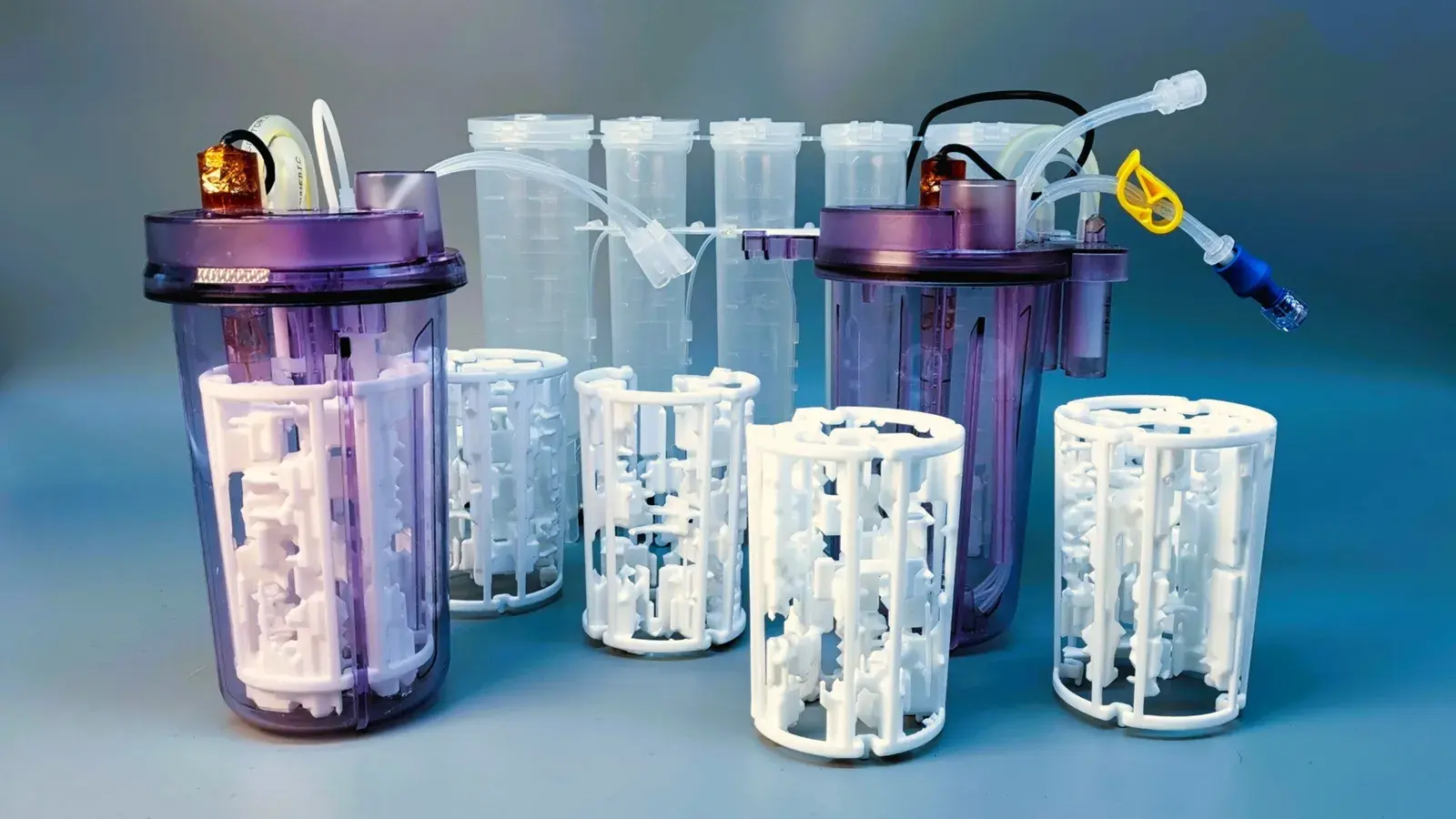
Four parallel runs: glass reference, material control and two pDS inserts (120 s / 230 s mixing time). pDS reproduced delayed growth, reduced titer and increased lactate - linked to O2 gradients at scale.
3D-printed pDS inserts bring the hydrodynamics of a production reactor into your lab bioreactor - scale-up becomes predictable.


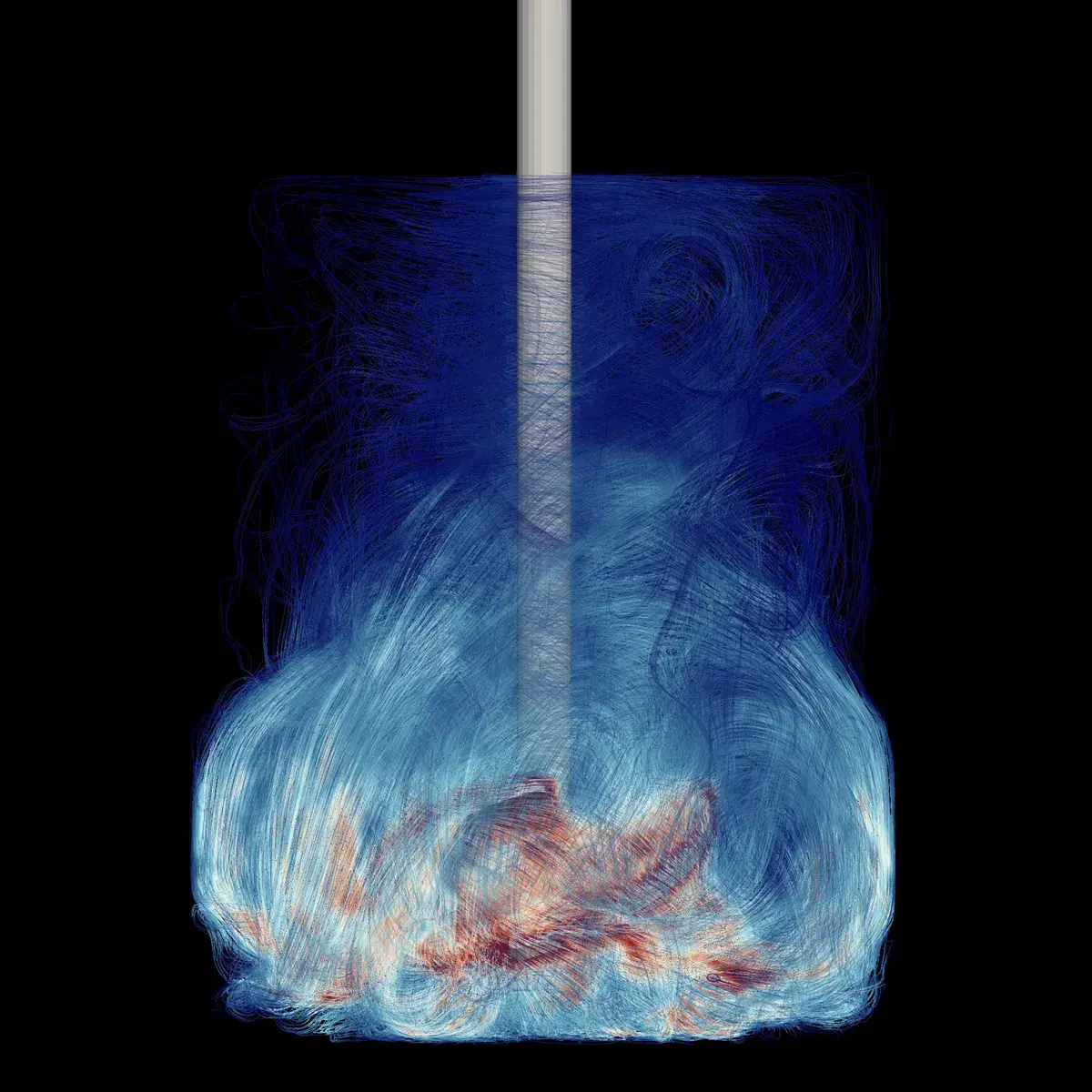
In a 250 mL lab vessel, a feed pulse is mixed within a few seconds. In a 2,000 L or 15,000 L tank it takes ten times as long or more - long enough for cells to cycle through zones with high glucose concentrations, too little oxygen or zones of pH extremes.
Cells respond to these fluctuations: lactate levels rise, growth is delayed, and product titer and quality change. A well-mixed lab reactor cannot reveal these effects, so a process that appeared robust during development may encounter its first gradients in the production tank.
The conventional approach relies on additional pilot-scale experiments, which are time-consuming, costly, and typically evaluate one condition at a time. We bring these investigations back to the bench, enabling faster, more cost-effective evaluation.
2 L vs. 15,000 L (CFD): glucose and dissolved oxygen. The large tank develops depleted zones the lab never sees. Explore gradients →
If small reactors mix too fast, slow them down. A 3D-printed insert slows mixing in your standard laboratory vessel to reflect production-scale conditions while preserving your existing setup - impeller, sensors, and headplate.
Example structure from a design run - not a final pDS product.
Which scales would you test first?
Configure a setWe put pDS to the test where scale effects matter: CHO antibody production, viral vaccine production, and new bioreactor design. Three projects with industry and research partners, with findings published or forthcoming.
Four parallel runs: glass reference, material control and two pDS inserts (120 s / 230 s mixing time). pDS reproduced delayed growth, reduced titer and increased lactate - linked to O2 gradients at scale.
YF17D-vectored Zika vaccine production lost ~90% yield in a 200 L mimic. Process development in pDS reactors at lab scale recovered titers at production-scale.
Over 200 geometric variations of stirrer number, position and type simulated - validated kLa prediction even for small volumes, high stirring speeds and high gassing rates.
Encountering scale effects you cannot reproduce in the lab?
Talk to us about your process
How a reactor designed using evolutionary AI recreates gradients found at the 10,000 L scale in a 1 L vessel and how they affect lactate levels and mAb titer in a CHO process. 4 pages, open access.
Download the white paperMost teams start with an insert set for the reactor they already use. If you first need to understand what happens in your production tank, start with CFD.

Off-the-shelf for the Ambr 250, custom-made for any system that can be opened - available as a DoE set or a single insert tailored to your target conditions.

Gradients, mixing time distribution and cell lifelines for your lab, pilot or production reactor.
The whole design space simulated - stirrers, baffles, vessel and more - compared using the same metrics.
Let’s discuss how p4b can help your team accelerate process development and bring your product to market faster.